

The Algarve is one of Portugal’s most popular year-round destinations, thanks largely to its mild climate, long sunny periods, and relatively warm summers. The Algarve temperature by month changes noticeably through the seasons, ranging from cool but generally mild winter days to hot, dry conditions during July and August. Understanding these monthly patterns can help travellers choose the right time for beaches, sightseeing, walking, golf, and other outdoor activities.
Although the Algarve has a generally Mediterranean climate, temperatures are not identical everywhere. Coastal locations benefit from the Atlantic Ocean, which can moderate both summer heat and winter cold, while inland areas may experience hotter afternoons and cooler nights. Monthly averages provide a useful planning guide, but actual weather can vary from year to year, so checking the forecast before travelling remains important.
Algarve Temperature by Month Overview
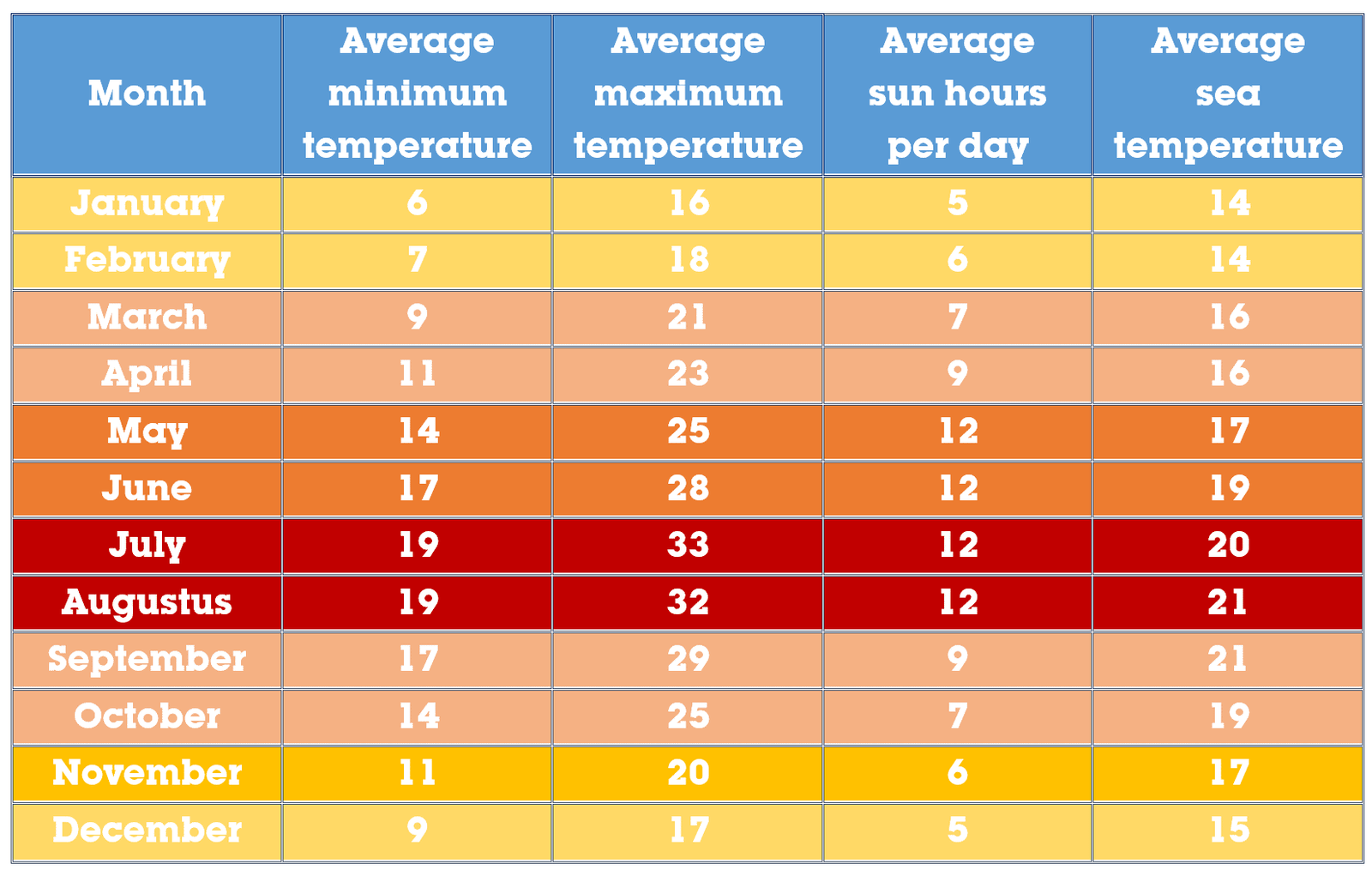
The Algarve generally experiences its coolest conditions between December and February, with average daytime highs around 16°C and cooler nights. Temperatures begin climbing through March and April before reaching approximately 22°C in May. June brings more consistent summer warmth, while July and August are normally the hottest months, with daytime averages close to 29°C. September remains warm before temperatures gradually decline during October and November.
| Month | Average Daytime High | Average Nighttime Low | Typical Conditions |
| January | 16°C / 61°F | 8°C / 46°F | Mild and wetter |
| February | 16°C / 61°F | 9°C / 48°F | Mild with occasional rain |
| March | 17°C / 63°F | 9°C / 48°F | Cool to mild |
| April | 19°C / 66°F | 11°C / 52°F | Mild and brighter |
| May | 22°C / 72°F | 13°C / 55°F | Warm and pleasant |
| June | 25°C / 77°F | 16°C / 61°F | Warm and dry |
| July | 29°C / 84°F | 18°C / 64°F | Hot and very dry |
| August | 29°C / 84°F | 18°C / 64°F | Hot and sunny |
| September | 26°C / 79°F | 17°C / 63°F | Warm and pleasant |
| October | 22°C / 72°F | 14°C / 57°F | Warm with some rain |
| November | 18°C / 64°F | 11°C / 52°F | Mild and wetter |
| December | 16°C / 61°F | 9°C / 48°F | Mild and wetter |
Winter Temperatures in the Algarve
January is usually the coolest month in the Algarve, but winter conditions are still relatively mild compared with many northern European destinations. Average daytime temperatures are around 16°C, while nighttime temperatures can fall to approximately 8°C. February is similar, with slightly longer daylight and gradually improving conditions. Rain is more common during winter, although sunny periods can still provide pleasant afternoons.
December also tends to bring daytime temperatures around 16°C, with evenings becoming cooler. Winter is therefore not the ideal season for guaranteed hot beach weather, but it can be excellent for travellers interested in sightseeing, walking, golf, local food, and quieter coastal experiences. A waterproof jacket and layers are useful because conditions can change from bright sunshine to rain or cooler evenings.
Spring Weather in the Algarve
Spring brings a steady increase in warmth and sunshine. March typically reaches around 17°C during the day, while April rises to approximately 19°C. By May, average daytime temperatures can reach about 22°C. Rainfall generally decreases as summer approaches, although occasional showers remain possible during the earlier part of spring. Longer daylight hours also make March through May increasingly attractive for outdoor activities.
The season is particularly appealing to visitors who prefer comfortable warmth rather than intense summer heat. Hiking, cycling, sightseeing, golf, and exploring historic towns can be enjoyable without the stronger afternoon temperatures of July and August. May is especially attractive because it can provide warm, bright conditions while avoiding some of the crowds associated with the main summer holiday period.
Summer Temperatures in the Algarve
Summer is when the Algarve delivers its most reliable hot and dry weather. June normally reaches around 25°C during the day, while July and August can average close to 29°C. Nighttime temperatures during the peak summer period may remain around 18°C, creating warm evenings that are well suited to outdoor dining, seaside walks, and late-night activities. Rainfall is generally very limited throughout this period.
July and August are excellent choices for travellers who specifically want hot beach weather, although the strongest afternoon heat can be challenging for people planning strenuous activities. Visitors can make outdoor days more comfortable by scheduling walks and sightseeing during the morning or late afternoon, drinking plenty of water, seeking shade when necessary, and using appropriate sun protection.
Autumn Temperatures in the Algarve
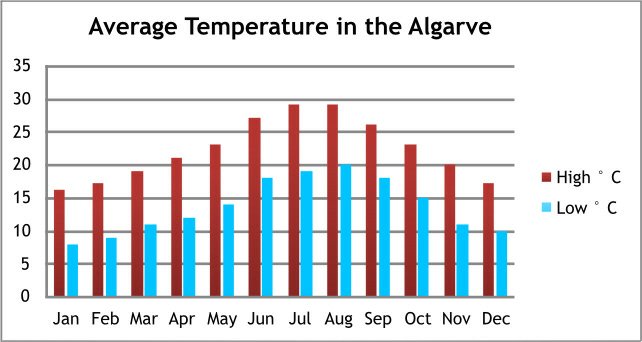
September remains warm, with average daytime highs around 26°C and nighttime temperatures close to 17°C. The sea can also retain warmth accumulated during summer, making this month particularly attractive for swimming and beach holidays. Although summer is gradually coming to an end, September can still provide plenty of sunshine and conditions suitable for boat trips, golf, sightseeing, and outdoor dining.
October brings average daytime temperatures of approximately 22°C, while November falls closer to 18°C. Rain becomes more likely as autumn progresses, but warm and sunny days can still occur. October can be especially appealing for travellers who enjoy exploring rather than spending every day on the beach, while November offers a quieter atmosphere and mild conditions for cultural and outdoor activities.
Hottest and Coldest Months in the Algarve
July and August are generally the hottest months in the Algarve, with average daytime highs of approximately 29°C. These months also tend to be among the driest, making them popular with visitors seeking classic summer sunshine. Coastal breezes can provide some relief, although inland areas may feel considerably hotter during the afternoon. Travellers who are sensitive to heat may prefer June or September.
January is generally the coldest month, with an average daytime high of around 16°C and nighttime temperatures near 8°C. However, describing January as extremely cold would be misleading. The Algarve’s southern location gives it a comparatively mild winter climate. The main difference from summer is the increased likelihood of rain, cooler evenings, shorter daylight hours, and less predictable beach conditions.
Algarve Sea Temperature and Swimming
Air temperature does not necessarily indicate how comfortable the Atlantic Ocean will feel. The Algarve’s sea remains relatively cool during winter and spring before gradually warming through summer. Late summer and early autumn generally offer the most comfortable water conditions for casual swimming because several months of sunshine have helped raise the sea temperature.
September can be particularly appealing for beach lovers because both the air and sea can remain warm after the peak summer period. Swimming is possible at other times of the year, but comfort depends on personal tolerance for cooler water. Surfers and watersports enthusiasts may have different preferences depending on the activity, equipment, wind, and wave conditions.
Best Time to Visit the Algarve
The best time to visit depends largely on what you want from the trip. Travellers looking for the hottest possible beach holiday will generally favour July and August, when daytime temperatures are around 29°C and rainfall is usually very limited. Those wanting warm weather with somewhat more comfortable conditions for sightseeing and outdoor activities may prefer June or September.
May and October can be excellent choices for travellers who want pleasant temperatures without the intensity of peak summer. These months can work particularly well for walking, golf, sightseeing, cycling, and exploring coastal towns. Winter is a different experience, offering mild conditions and fewer crowds rather than guaranteed sunshine, making it suitable for visitors prioritising relaxation, culture, food, and outdoor exploration.
What to Pack for Different Months
Packing for the Algarve is easiest when you consider both daytime and nighttime temperatures. During winter, layers, comfortable shoes, and a waterproof jacket are sensible choices because mild afternoons can be followed by cool evenings or rain. Spring and autumn also benefit from flexible clothing, particularly because temperatures can change considerably between mornings, afternoons, and evenings.
Summer generally calls for lightweight clothing, swimwear, breathable footwear, sunglasses, a hat, and reliable sun protection. Even during July and August, carrying a light layer can be useful for breezy coastal evenings or air-conditioned indoor spaces. Regardless of the month, comfortable walking shoes are valuable because many Algarve experiences involve exploring beaches, old towns, cliffs, promenades, and scenic paths.
Algarve Weather and Regional Differences
The Algarve is a relatively compact region, but its weather can vary depending on location. Coastal resorts are strongly influenced by the Atlantic Ocean, which can moderate temperatures and produce refreshing breezes. Inland areas may experience greater temperature differences, with hotter afternoons and cooler nights. This means a general regional average should be treated as a guide rather than an exact forecast.
The western Algarve can also experience different conditions from the eastern part of the region because of geography and exposure to Atlantic weather systems. Travellers staying in a particular resort should therefore check the forecast for that specific location. This is especially important when planning outdoor activities, beach days, boat trips, hiking, or long sightseeing excursions.
Conclusion
The Algarve temperature by month follows a clear seasonal pattern, moving from mild and wetter winter conditions to increasingly warm spring weather before reaching hot, dry summer temperatures. January is generally the coolest month, while July and August are normally the hottest. September remains warm, and October can still provide pleasant conditions before the cooler and wetter part of the year returns.
There is no single perfect month for every traveller. July and August are best suited to those seeking maximum summer heat, while June and September provide an appealing balance of warmth and comfort. May and October can be excellent for active holidays and sightseeing, while winter offers a quieter way to experience the Algarve. Checking current forecasts alongside monthly climate averages is the best way to plan confidently.
Frequently Asked Questions
What is the hottest month in the Algarve?
July and August are generally the hottest months, with average daytime temperatures around 29°C. Individual heatwaves can produce significantly higher temperatures, particularly inland. Travellers who enjoy hot beach conditions may find these months ideal, while those planning extensive hiking or sightseeing may prefer the slightly cooler conditions of May, June, September, or October.
What is the coldest month in the Algarve?
January is generally the coolest month, with average daytime highs around 16°C and nighttime temperatures close to 8°C. Despite being winter, these temperatures remain mild compared with many parts of Europe. Rainfall is more common than in summer, but sunny days can still make January suitable for sightseeing and outdoor activities.
Is the Algarve warm in April?
April is generally mild, with average daytime highs around 19°C and nighttime temperatures near 11°C. It is a good month for walking, sightseeing, cycling, and golf, particularly for people who prefer moderate temperatures. The sea may still feel cool, so travellers focused on swimming may prefer later spring or summer.
Is September a good month to visit the Algarve?
September is widely appealing because temperatures remain warm while the most intense summer heat begins to ease. Average daytime highs are around 26°C, and nighttime conditions remain comfortable. The sea can also retain considerable summer warmth, making September suitable for swimming, beach trips, sightseeing, boat excursions, and outdoor dining.
Can you swim in the Algarve all year?
Swimming is possible throughout the year for people comfortable with cooler Atlantic water, but conditions are generally most pleasant during summer and early autumn. Sea temperatures are considerably cooler during winter and spring. Casual swimmers often prefer the warmer months, while surfers and watersports enthusiasts may visit throughout the year depending on conditions.
What is the best month to visit the Algarve?
The ideal month depends on your priorities. July and August are best for maximum summer heat, while June and September offer warm conditions with a potentially more comfortable balance. May and October are particularly useful for outdoor activities and sightseeing. Winter suits travellers who want mild temperatures, quieter resorts, and a slower pace.
You may also read Popular Lilo and Stitch Cake Designs
