

Introduction
Running successful Facebook and Instagram advertising campaigns isn’t just about creating eye-catching visuals or writing persuasive copy. It also requires understanding what works in your industry and how other businesses communicate with their audiences. That’s where the Meta Ads Library becomes an invaluable resource.
Originally introduced to improve transparency across Meta’s advertising platforms, this free tool has evolved into one of the best resources for marketers, entrepreneurs, agencies, and eCommerce businesses. It allows anyone to browse active advertisements, study creative strategies, and identify marketing trends without paying for expensive competitor research software.
Whether you’re planning your first campaign or refining an existing advertising strategy, learning how to use this platform can help you uncover new ideas, evaluate competitors, and make more informed marketing decisions. In this guide, you’ll discover how it works, why professionals rely on it, and the best ways to use it effectively.
What Is Meta Ads Library?
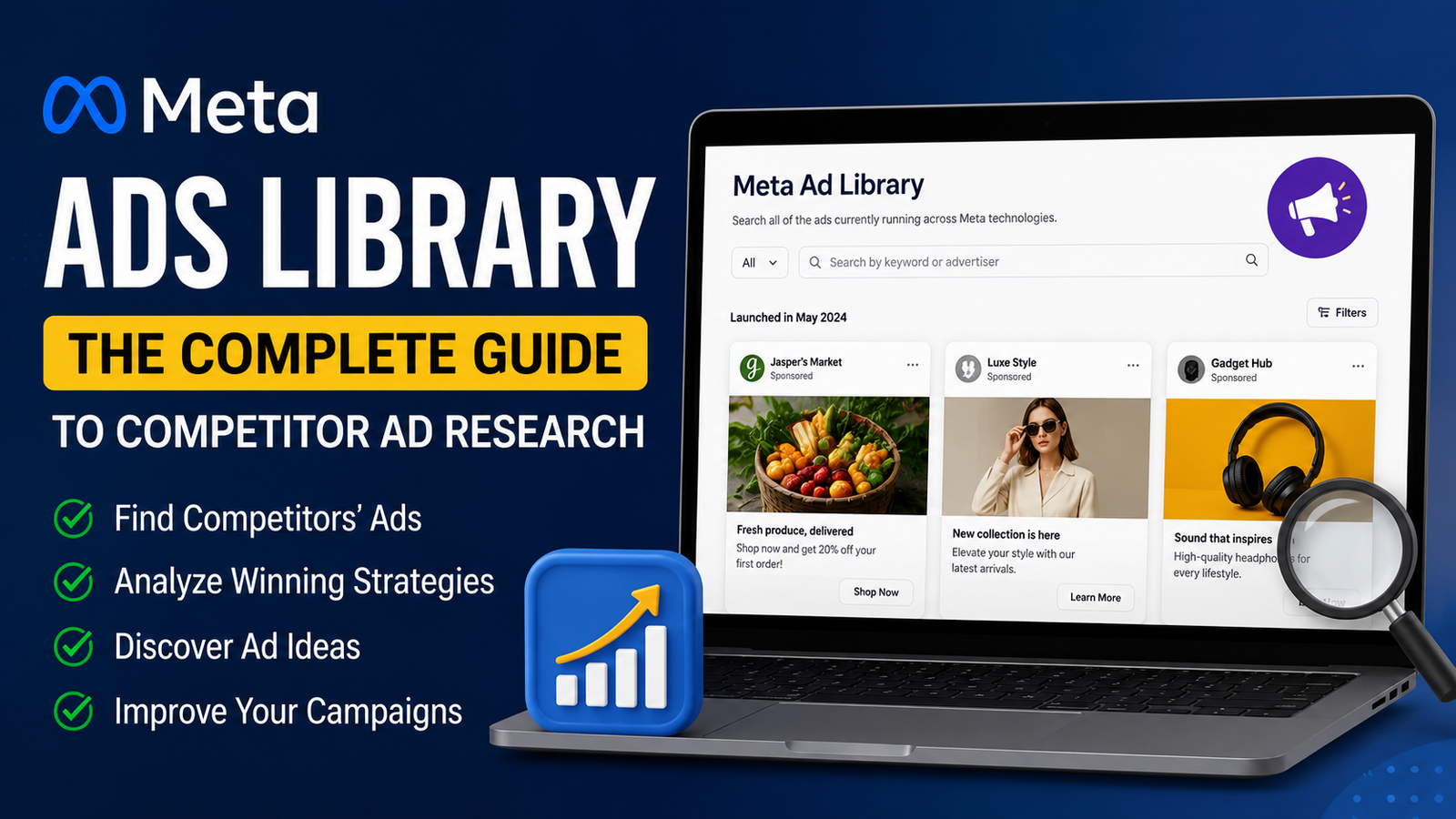
The Meta Ads Library is a free online database that displays active advertisements running across Meta’s platforms, including Facebook, Instagram, Messenger, and the Audience Network. It enables anyone to search for ads by advertiser, keyword, or organization, making advertising more transparent while giving marketers valuable insights into current campaigns.
Unlike paid competitor intelligence tools, the library doesn’t require a subscription. Anyone can access it through a web browser and explore ads from brands of all sizes, from local businesses to global companies.
While the platform doesn’t reveal private campaign details such as budgets, targeting options, or conversion rates, it provides enough information to help marketers understand how advertisers present their products and services. Users can review ad creatives, headlines, descriptions, calls to action, and the platforms where those ads appear.
Because the database is updated regularly, it’s also an excellent way to stay informed about seasonal promotions, product launches, and changes in advertising trends.
Why Advertisers Use This Tool
Successful marketers rarely build campaigns based on guesswork. Instead, they research competitors, study successful messaging, and look for creative inspiration before investing in paid advertising.
One of the biggest advantages of the Meta Ads Library is that it allows businesses to observe active campaigns across different industries. By reviewing multiple advertisers, you can identify common themes, promotional strategies, and creative formats that are currently being used to reach potential customers.
For example, an online clothing store can analyze fashion brands to see how they present new collections, promote seasonal sales, or encourage customers to complete purchases. A real estate agency can review local property advertisements to understand how competitors showcase listings and attract buyers.
This type of research helps marketers generate original ideas while reducing the amount of trial and error involved in campaign planning.
Another reason professionals rely on the platform is its ability to reveal broader industry trends. If several competitors begin promoting similar offers or using comparable creative styles, it may indicate a shift in customer preferences or market demand.
How the Platform Works
The platform is designed to make advertising research straightforward, even for beginners.
To get started, users select a country and an ad category before entering the name of a business, organization, or keyword into the search bar. Within seconds, the database displays matching advertisements that are currently active.
Each listing typically includes useful details such as:
- Images or videos used in the advertisement
- Primary ad copy
- Headlines
- Call-to-action buttons
- Supported Meta platforms
- Date the campaign became active
Some advertisers also run multiple versions of the same campaign. Comparing these variations can provide valuable insights into how brands test different visuals, messaging, and promotional angles.
It’s important to understand that the library focuses on transparency rather than performance analytics. It doesn’t provide information about advertising budgets, audience demographics, click-through rates, or return on investment. Those metrics remain private to the advertiser.
Despite these limitations, the available information is more than enough for competitive research and creative inspiration.
How to Find Competitors’ Ads
One of the most practical uses of the platform is competitor analysis.
Start by searching for businesses within your industry. If you own a skincare brand, for instance, you can search for well-known companies selling similar products. Instead of looking at only one competitor, review several advertisers to identify recurring patterns in their campaigns.
While analyzing ads, pay attention to the following elements:
- Headlines that immediately capture attention
- Product images or videos
- Promotional offers and discounts
- Customer benefits highlighted in the copy
- Call-to-action buttons
- Landing page messaging
Rather than copying what other businesses are doing, focus on understanding why their campaigns are structured in a certain way. You may notice that many successful brands emphasize customer problems before presenting their solutions or consistently use testimonials to build trust.
It’s also worth revisiting competitors regularly. Advertising strategies change throughout the year, especially during holidays, product launches, and major sales events. Tracking these changes over time can help you anticipate industry trends and plan campaigns more effectively.
Key Features at a Glance
The following table highlights the main features available through the platform and how they benefit marketers.
| Feature | Purpose | Benefit |
|---|---|---|
| Advertiser Search | Find active ads from specific businesses | Makes competitor research quick and easy |
| Keyword Search | Discover advertisers within a niche | Helps identify emerging competitors |
| Country Filter | View campaigns in different regions | Useful for localized marketing research |
| Ad Creatives | Review images and videos | Provides design inspiration |
| Ad Copy | Analyze headlines and messaging | Improves copywriting ideas |
| Call-to-Action | View CTA buttons | Understands conversion strategies |
| Active Campaign Dates | Shows when ads started running | Helps identify long-running campaigns |
These features make the platform valuable for businesses of all sizes, whether you’re running local campaigns or managing international advertising efforts.
Benefits and Limitations
Like any marketing tool, the platform offers significant advantages while also having a few limitations. Understanding both helps you use it more effectively and set realistic expectations.
One of its biggest strengths is accessibility. Since it’s free, businesses of every size can research advertising campaigns without purchasing expensive competitive intelligence software. This makes it especially valuable for freelancers, startups, small businesses, and marketing agencies working with limited budgets.
Another major advantage is the ability to monitor industry trends. By checking advertisements regularly, you can identify seasonal promotions, product launches, pricing strategies, and creative approaches that successful brands are using. Instead of starting every campaign from scratch, you can gather inspiration from real-world examples and adapt those ideas to fit your own brand.
The platform also encourages continuous learning. Reviewing advertisements from different industries can introduce you to fresh storytelling techniques, design styles, and promotional strategies that you may not have considered before.
However, there are some limitations. The platform does not reveal audience targeting, campaign budgets, conversion rates, click-through rates, or return on ad spend (ROAS). These metrics remain private because they contain sensitive business information. As a result, advertisers should use the available data as inspiration rather than assuming a campaign is successful simply because it appears in the library.
Best Practices for Better Ad Research
Simply browsing advertisements isn’t enough to improve your marketing. The most successful advertisers approach competitor research with a clear process and use what they learn to refine their own strategies.
Begin by researching several competitors instead of focusing on just one. Comparing multiple brands helps you identify common themes and recurring patterns rather than isolated ideas. If several companies emphasize the same customer benefit or use a similar creative style, there’s often a reason behind it.
Pay close attention to messaging. Ask yourself what problem the advertisement solves, what emotions it appeals to, and what makes the offer compelling. Understanding the strategy behind an ad is far more valuable than copying its wording or design.
It’s also important to review the landing page whenever possible. An effective advertisement usually leads to a well-designed page that continues the same message and guides visitors toward a specific action. Looking at the complete customer journey provides a much clearer understanding of why a campaign may be working.
Finally, create a swipe file—a collection of noteworthy advertisements organized by industry or campaign type. This gives you a source of inspiration whenever you’re planning new campaigns.
Common Mistakes to Avoid
Many marketers use advertising research tools incorrectly, limiting the value they receive. Avoiding a few common mistakes can help you make better decisions.
Copying Competitors
The purpose of research is to understand successful strategies, not duplicate someone else’s work. Creating original campaigns based on your own brand voice will always produce better long-term results than copying another business.
Ignoring the Bigger Picture
An attractive advertisement doesn’t guarantee success. Consider the offer, the target audience, the landing page, and the overall marketing strategy rather than judging an ad by its design alone.
Looking at Only One Campaign
A single advertisement rarely tells the full story. Review several campaigns from different competitors to gain a broader understanding of your market.
Failing to Research Regularly
Advertising trends change quickly. Seasonal promotions, consumer preferences, and creative formats evolve throughout the year, so make competitor research part of your regular marketing routine instead of treating it as a one-time task.
Tips for Making the Most of Your Research
To get the greatest value from your research, follow these practical tips:
- Check competitor campaigns every week or two.
- Compare at least three to five businesses in your industry.
- Study both visuals and written copy.
- Look for patterns instead of isolated ideas.
- Save inspiring advertisements in an organized folder.
- Monitor seasonal campaigns throughout the year.
- Test your own creative ideas instead of copying competitors.
- Combine your research with customer feedback and campaign analytics.
Consistent research leads to stronger advertising decisions over time.
Is It Better Than Paid Ad Research Tools?
For many businesses, the answer is yes—at least when getting started.
Premium competitor research platforms often include additional features such as estimated traffic, historical advertising data, and advanced analytics. These tools can be useful for large agencies and enterprise-level businesses.
However, for freelancers, small businesses, and most marketers, the free insights available through this platform are more than enough to improve creative ideas, monitor competitors, and stay informed about advertising trends.
The best approach is to use the platform as your primary source of inspiration and supplement it with your own campaign data and customer insights.
Frequently Asked Questions
1. Is Meta Ads Library free to use?
Yes. It is completely free and available to anyone without requiring a paid subscription.
2. Can I search for Facebook and Instagram ads?
Yes. The platform includes active advertisements running across Facebook, Instagram, Messenger, and the Audience Network.
3. Does it show advertising budgets?
No. Budget information, audience targeting, and campaign performance metrics remain private.
4. Can I search using keywords?
Yes. You can search by advertiser name, organization, or keyword to discover businesses advertising within a particular niche.
5. Is it useful for small businesses?
Absolutely. Small businesses can study competitors, find creative inspiration, and improve their advertising strategies without investing in costly research tools.
6. How often should I use it?
Checking the platform weekly is a good habit. Regular research helps you identify new campaigns, seasonal promotions, and changes in competitor strategies.
Conclusion
The Meta Ads Library has become an essential resource for anyone involved in digital advertising. By providing free access to active campaigns across Facebook, Instagram, Messenger, and the Audience Network, it allows businesses to study real-world marketing strategies, discover creative inspiration, and monitor industry trends.
Although the platform doesn’t reveal performance metrics such as budgets or conversion rates, it offers more than enough information to improve campaign planning and competitor research. Whether you’re running an eCommerce store, managing client accounts, or promoting a local business, regular research can help you create stronger, more informed advertising campaigns.
The key to success isn’t copying what others are doing—it’s understanding the ideas behind successful campaigns and adapting those insights to fit your own brand. Combined with testing, analytics, and a clear understanding of your audience, this approach can help you build advertisements that are both engaging and effective.
